
Choosing an end-of-life option is deeply personal, but many people are now considering the environmental impact of their funeral. In particular, the carbon emissions associated with traditional burial, cremation, and natural (green) burial can vary dramatically.
This article explores each option’s carbon footprint and environmental implications in a warm, informative, and eco-conscious tone – helping you make a sustainable choice for a final farewell.
Cremation and its Carbon Emissions
Cremation involves burning the body at high temperatures (around 870–980°C) until only ashes remain. It has become the most popular choice in the UK – over 75% of funerals are cremations – partly because it doesn’t require long-term land use. However, cremation is highly carbon-intensive.
A typical gas-powered cremation produces around 126 kg of CO₂ equivalent CO2e – about the same carbon output as driving a car from Brighton to Edinburgh. Some estimates (accounting for all energy and fuel use) put the carbon emissions even higher, at roughly ~400 kg CO₂ per body – the equivalent of a 500-mile road trip. These greenhouse gas emissions come primarily from the natural gas fuel used to fire the crematorium furnace and from burning the coffin and body.
In addition to CO₂, cremation releases hidden pollutants. The process can emit nitrogen oxides (NOx) from burning coffin materials (especially if the coffin is made of chipboard or contains glue/varnish). Cremation fumes also contain vaporised mercury from dental fillings, which in 2005 accounted for about 16% of the UK’s total mercury emissions. Modern crematoria are improving their filtration systems to capture toxins like mercury and dioxins, but older facilities may still release these into the air.
On a positive note, steps are being taken to reduce cremation’s carbon footprint. Some crematoria are upgrading to electric cremators powered by renewable energy, which can cut carbon emissions by up to 85% compared to traditional gas cremators. Using simpler coffins (for example, cardboard or wicker) can also lower the energy needed and emissions produced during the burn.
Still, even with improvements, standard cremation remains a significant source of carbon emissions in the funeral industry. For context, one efficient crematorium operator in the UK reports about 160–190 kg CO₂ emitted per cremation under typical conditions. Some specialised providers offer streamlined “direct cremation” services that can reduce this to around 80 kg CO₂ by avoiding elaborate funerals and using efficiency measures, but these are exceptions. Overall, if minimising carbon emissions is a priority, it’s clear that cremation’s reliance on fossil gas and high heat makes it one of the more carbon-heavy funeral options.
(Note: Cremated ashes themselves are very alkaline and nutrient-rich, which can harm plant life if scattered in large amounts in one place. It’s wise to scatter ashes widely or in flowing water to avoid damaging local ecosystems. While this doesn’t affect carbon emissions, it’s an environmental consideration to keep in mind alongside the carbon footprint.)
Traditional Burial: Hidden Carbon Costs and Land Impact
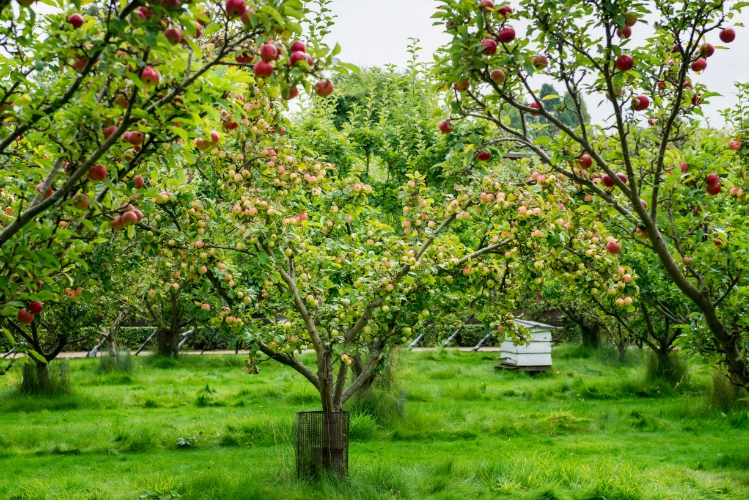
Conventional burial (in a cemetery) might seem “greener” at first glance because it doesn’t involve the intense fuel burning of cremation. In a burial, the body is typically embalmed with chemicals, placed in a coffin (often made of hardwood, metal, or chipboard with plastics), and interred in the ground with a headstone or marker.
The direct greenhouse gas emissions from the burial itself are minimal – a body will decompose gradually over years, releasing some CO₂ and methane, but much of that carbon is part of the natural cycle of plant and soil decomposition. In fact, the immediate carbon output at the gravesite is almost zero (aside from a small amount of fuel if a mechanical digger is used to excavate the grave).
One analysis notes that the operational emissions from a burial (e.g. using a backhoe for digging) can be as low as ~4 kg CO₂ – virtually negligible compared to cremation’s 100+ kg. However, traditional burial carries “hidden” carbon costs that add up significantly when you look at the full picture.
Several carbon-intensive processes are embedded in a traditional funeral and burial:
-
Coffin production and materials: Fancy coffins made of hardwood, metals, lacquer, and synthetic fabrics have a large carbon footprint. Wood may be harvested and transported long distances (many polished coffins and granite headstones are imported from overseas), and manufacturing involves energy use for cutting, shaping, and finishing.
For example, high-quality hardwood coffins (often imported) and granite or marble headstones (sometimes shipped from China) require mining, processing, and shipping, all of which generate CO₂. Even MDF or chipboard coffins use glues and resins derived from petrochemicals.
These “embodied” carbon emissions in the coffin and memorial can be substantial. (One startling statistic: one acre of cemetery land, after many years of burials, contains about 97 tonnes of steel, 2,000 tonnes of concrete (from vaults and headstones), 4,500 litres of chemical embalming fluid, and enough wood to build 4 houses – all buried underground. Those materials represent a huge amount of carbon emissions in their production.) -
Embalming chemicals: The common embalming fluid is formaldehyde-based, a toxic carcinogenic chemical. Producing and transporting these chemicals has an environmental cost, and when an embalmed body is buried, the chemicals can eventually leach into soil and groundwater.
While the carbon footprint of manufacturing embalming fluid is relatively small, it’s an environmental pollutant and not needed at all in a natural decomposition process. Avoiding embalming (when possible) saves those chemical emissions and prevents potential soil contamination. -
Grave digging and machinery: Many cemetery graves are dug with diesel-powered machinery, like backhoes or mini-excavators, especially in larger or municipal cemeteries. This fuel use does emit CO₂, albeit on a small scale per grave (a few kilograms of CO₂.
There’s also a less obvious impact: digging into soil releases some amount of carbon that was stored in the ground. Disturbing the earth (similar to tilling soil in agriculture) can release CO₂ that had been sequestered in soil organic matter. Deep grave digging (typically 6 feet down) disrupts the soil layers; although this is a one-time release and not massive in the scheme of things, it’s another piece of the footprint puzzle. -
Cemetery maintenance: Unlike a natural woodland, a traditional cemetery is often maintained like a park or garden. Lawns are mowed regularly with gasoline mowers, and groundskeepers may trim trees, use leaf blowers, or even water the grass during dry spells. This ongoing upkeep consumes fossil fuels and electricity over many years for each burial plot.
There’s also typically use of fertilisers to keep grass green and occasional pesticides or herbicides to control weeds – manufacturing those lawn care products has its own carbon footprint. All told, the long-term maintenance of a burial plot in a manicured cemetery contributes to the burial’s carbon footprint year after year. In contrast, cremation has a one-time carbon hit, whereas a grave site carries an ongoing environmental cost to keep it pristine.
In terms of carbon emissions numbers, it’s hard to pin down an exact figure for a “typical” burial because it varies with choices. But we can consider some estimates: The coffin can contribute anywhere from a few kilograms of CO₂ (for a simple cardboard coffin or wicker coffin) up to ~50 kg or more (for a lavish imported hardwood coffin with metal fittings).
Cemetery maintenance and visitor travel over decades can add dozens more kilograms. One UK calculator (from Greener Goodbyes) estimates the total footprint of a woodland burial at roughly 100 kg CO₂ – substantially lower than a typical cremation, but not zero. A traditional burial in an urban cemetery with a heavy coffin and lots of visits could equal or exceed that, especially over many years.
In summary, while burial doesn’t directly emit CO₂ in the moment, its “hidden” carbon costs (materials, digging, maintenance) mean it can still rival or even surpass cremation’s impact if not done in an eco-conscious way.
Additionally, traditional burial uses land space. Cemeteries take up land that often must be maintained indefinitely, and in crowded parts of the UK this is becoming unsustainable (many cemeteries are running out of space). Land used for cemeteries is land that generally can’t revert to natural habitat or be used for other green purposes, so there’s an opportunity cost to consider (though this is not a direct carbon emission, it’s an environmental factor).
Some areas have even resorted to practices like “reusing” graves or removing trees to make room for more burials, highlighting the challenge of the cemetery land footprint.
Bottom line: Traditional burial avoids the big burst of emissions from a cremation furnace, but it has its own climate costs through the embodied carbon in coffins, graves, and upkeep. Each embalmed, steel-lined, and manicured grave adds to our planet’s carbon burden in less obvious ways.
Natural Burial: The Eco-Friendly Choice in the UK
Natural burial (also known as green burial or eco burial) is emerging as the most sustainable end-of-life option currently available in the UK. This approach aims to return the body to the earth with minimal environmental disturbance, letting nature take its course.
In a natural burial, the body is not embalmed (no toxic chemicals), and it’s buried in a biodegradable coffin or shroud made of natural materials like untreated wood, wicker, cardboard, or cotton. There are no concrete vaults, chipboard coffins, or heavy headstones involved – often the grave is left unmarked or marked with a simple wooden plaque, native stone, or a planting like a tree.
The burial is typically shallower (around 3-4 feet deep rather than six feet) to keep the body in the active topsoil layer, where microbes and tree roots can more rapidly break everything down. All of this means far fewer carbon emissions and resources used compared to conventional funerals.
The carbon footprint of a natural burial is extremely low. One technical report found that the immediate carbon emissions associated with a natural burial are essentially zero – especially if the grave is dug by hand without machinery. There’s no fossil fuel burned during the burial (aside from maybe a car to transport the body to the site), and the coffin or shroud has a minimal carbon cost (e.g. a simple pine, cardboard or willow coffin might be locally made and involve only a few kilograms of CO₂ in its production).
Because embalming is prohibited, we avoid the carbon and energy footprint of producing embalming fluid and the risk of those chemicals polluting the environment. Natural burial grounds also generally forbid plastics, metal, or any non-biodegradable materials in the grave – meaning everything in the ground will decompose naturally and relatively quickly, turning into soil and plant nutrients rather than lingering for decades.
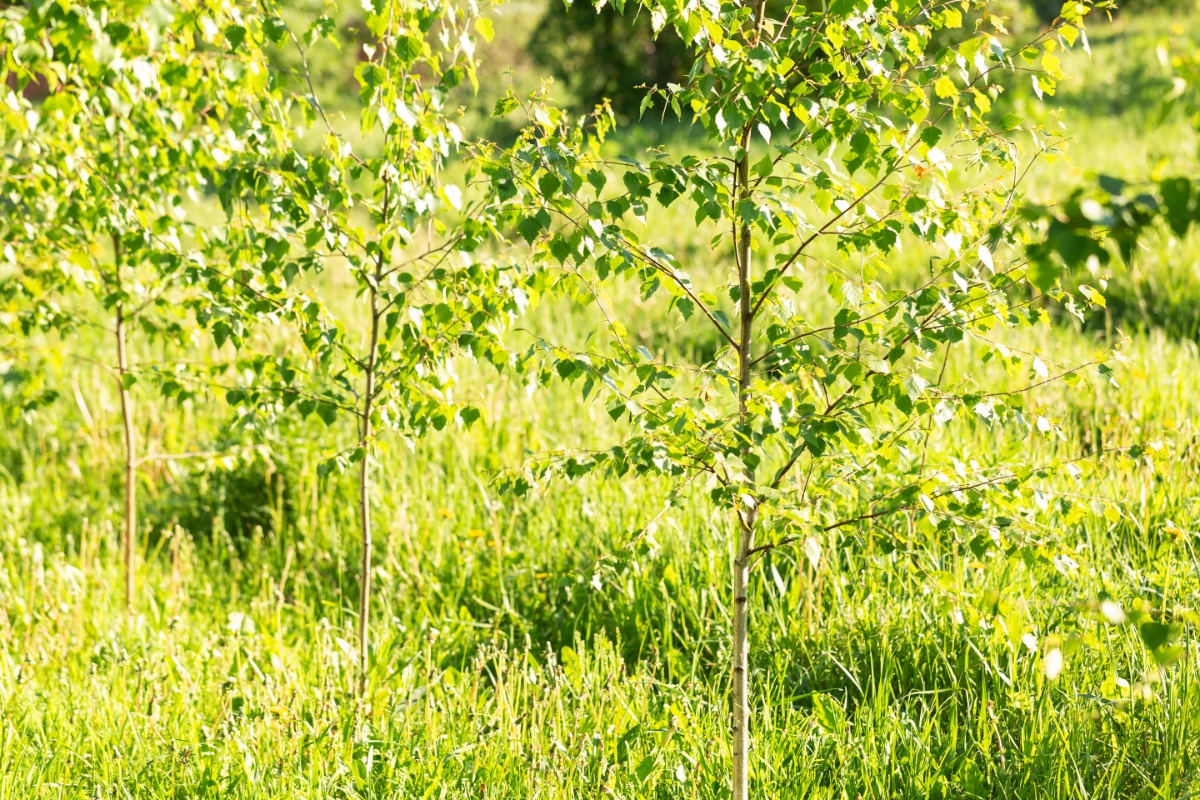
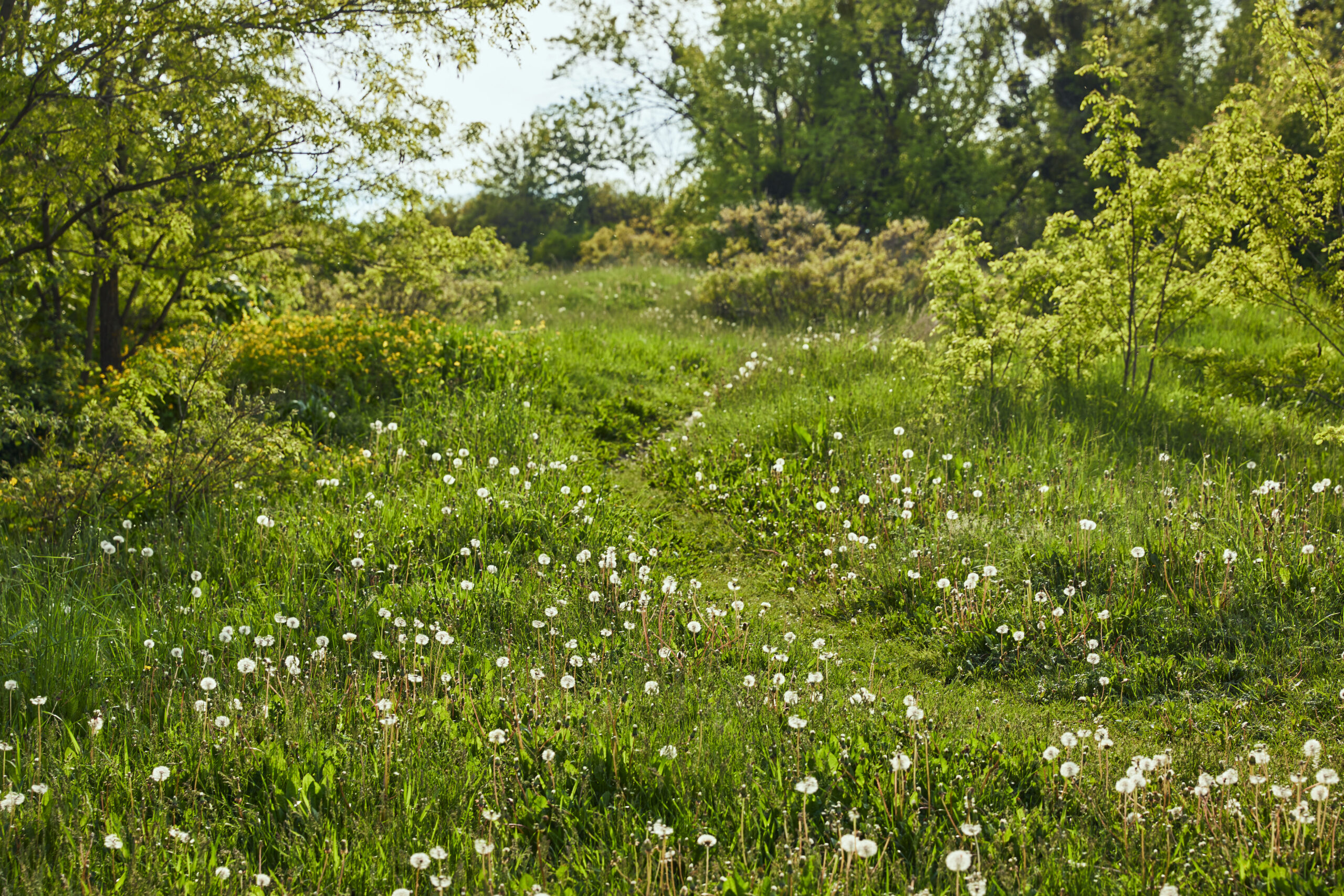
An important difference is that natural burial sites are managed for conservation, not intensive maintenance. These sites are often meadows, forests, or pastureland. Instead of lawn mowing and weekly landscaping, the area is allowed to grow wild or is managed in an ecologically sensitive way (e.g. seasonal mowing of a meadow, or maintaining walking paths, but not mowing each individual grave). This means no ongoing emissions from lawnmowers, pesticides, or water irrigation like in a traditional cemetery.
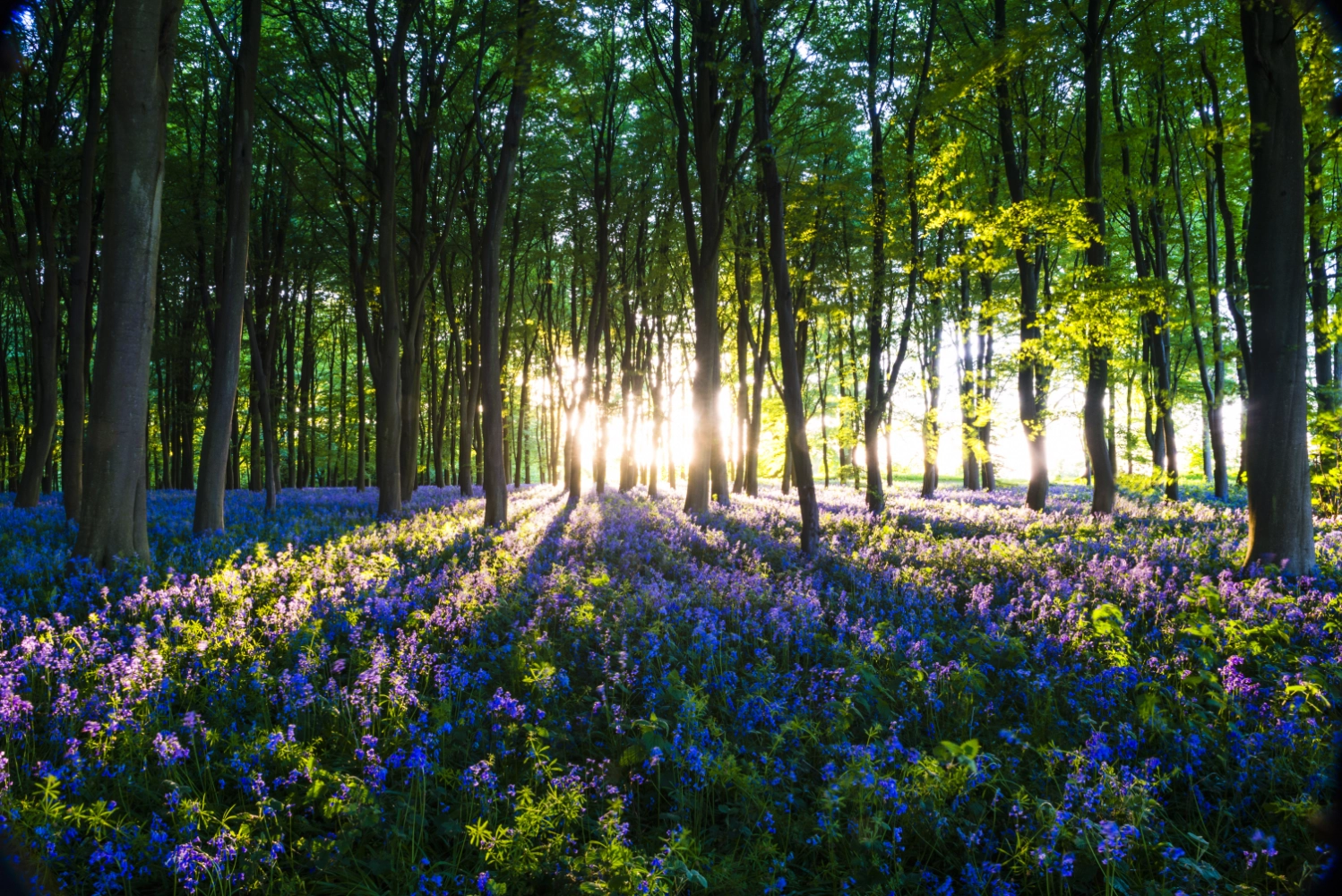
In fact, many green burial grounds actively sequester carbon by preserving and restoring natural vegetation. Your gravesite could become part of a forest or wildflower meadow that absorbs CO₂ over time. In that sense, a natural burial can leave a positive legacy – creating habitat for wildlife and helping native trees grow, effectively offsetting some carbon instead of adding to it.
The result is that natural burials have the smallest carbon footprint of all current options. One could argue the footprint is nearly just the transport to the site. Even considering the full life cycle (materials, digging, etc.), it’s drastically lower. For example, in that Greener Goodbyes calculator, a woodland burial’s ~100 kg CO₂ figure likely factors in things like a basic coffin, one-off land disturbance, and perhaps visitor travel. If family and friends minimise driving (or if the site is nearby), even those emissions shrink.
Many natural burial grounds encourage local sourcing of materials (using local wood for coffins, for instance) and often double as protected green spaces. It’s no surprise that natural burial is often cited as the greenest funeral choice available today.
Natural burial has grown rapidly in the UK since the 1990s. The first dedicated natural burial ground in the UK opened in 1993, and today there are hundreds of natural burial sites across the country – by one count, over 250 sites have been established. These range from woodland burial parks to meadow and farm-based sites. Each will have its own character, but all share the ethos of simplicity and sustainability: no embalming's, eco-friendly coffins, and an atmosphere of nature and tranquillity. They often allow (or even encourage) families to participate in the process, and some people plant a tree or wildflowers on the grave as a living memorial instead of erecting a marble headstone.
It’s worth noting that natural burial grounds usually don’t look like conventional cemeteries – and that’s by design. You might see a field of wildflowers, a peaceful grove of trees, or a hillside pasture with grazing sheep. The idea is to let nature thrive while your loved one’s body gently returns to the earth. Because of this, natural sites are often located in the countryside or outskirts of towns (space is needed for a wild environment). This means you should consider the travel factor: if family and friends will drive long distances to visit the grave frequently, those car trips do create emissions.
However, many people find that they visit natural gravesites less regularly but more purposefully – perhaps enjoying a walk in nature a few times a year rather than weekly grave tending. And the eco-benefits of the site’s land management usually far outweigh a bit of car travel. If keeping the entire process local and low-carbon is important, you can choose a nearby green burial ground and even arrange carpooling or a green transport (some funerals have used electric hearses or even bicycle hearses!).
In summary, natural burial is the most eco-friendly funeral option in terms of carbon emissions and overall environmental impact. It forgoes the heavy carbon inputs of both cremation (no fossil gas needed) and conventional burial (no concrete, plastics, glues, or intensive maintenance). By using minimal resources and letting nature do the work, natural burial dramatically cuts the carbon footprint of one’s final act. It truly embodies the idea of a “sustainable burial” – returning to the earth in a way that nourishes, rather than harms, the planet.
Aquamation: A Low-Carbon Alternative on the Horizon
Beyond burial and cremation, a new method called aquamation (also known as water cremation or resomation) is gaining attention as an emerging low-carbon option for body disposition. Aquamation is a process of alkaline hydrolysis: instead of burning the body, it uses a solution of water and alkali (potassium hydroxide) combined with gentle heat and sometimes pressure. Over a few hours, this dissolves soft tissues, leaving only bones, which are then dried and ground into ash (a powder similar to cremated ashes) to give to the family. The liquids are safely treated and returned to the water system. Importantly, no combustion is involved – which means almost no direct emissions.
From a carbon perspective, aquamation is incredibly promising. Research indicates that a water cremation uses less than one-fifth of the energy of a traditional flame cremation. In other words, it can cut carbon emissions by up to 80% compared to standard cremation. There’s no burning of fossil gas, and thus CO₂ output is drastically lower.
Aside from electricity to heat the water (which can be sourced renewably), the process doesn’t emit greenhouse gases or air pollutants. No mercury vapor, no smoke, and no need for high-temperature ovens. It also avoids the need for a casket to be burned, and no embalming is required beforehand (the body can be processed as-is), so it carries many of the same ecological benefits as a natural burial in that regard.
As of now, aquamation has limited availablity in the UK Co-op Funeralcare was the first company in 2023. There are public perception issues to overcome, but change is on the way. In some countries and several U.S. states, aquamation has been legalised and adopted. Once more are available, aquamation could become a game-changer for eco-friendly funerals: it offers the space-saving advantage of cremation (no land use) with a carbon footprint closer to (or even lower than) natural burial. It’s a gentle process that aligns with the values of those who want a “green” cremation alternative without the high emissions. Keep an eye out for water cremation becoming more available and accessible option for those seeking a truly low-carbon farewell.
Archbishop Desmond Tutu chose a aquamation / water cremation in 2021.
Human Composting
Another innovative method, often called human composting, Terramation, natural organic reduction (NOR), or recomposition, has begun in some places like the US. It involves converting the body into soil through controlled composting.
This method also boasts a very low carbon footprint – only ~28 kg CO₂ according to one study – but it is not yet available in the UK due to legal constraints. It’s worth knowing that the landscape of eco-disposition methods is evolving, and what’s not possible today may be offered in the near future.
Choosing a Sustainable Farewell
When it comes to carbon emissions from funerals, the differences between cremation, traditional burial, and natural burial are significant. Cremation convenes the dead efficiently but at the cost of high CO₂ emissions from fossil fuels and some toxic by products. Traditional burial avoids those immediate emissions but carries a hidden carbon footprint in the form of resource use (coffins, headstones) and ongoing maintenance of cemetery grounds. Natural burial, by contrast, keeps things simple and truly sustainable, with minimal inputs and often a positive environmental impact on the land. And on the horizon, aquamation offers a technological solution to drastically cut the carbon cost of cremation.
In the UK context, natural burial stands out as the eco-conscious choice for those who want to minimise their final environmental impact. By choosing a natural or woodland burial, you’re essentially opting out of the carbon-heavy aspects of funerals – no flames, no concrete, no chemicals – and instead contributing to a green space. It’s a decision that can be comforting to those who’ve spent their lives caring about nature and climate: you’re ensuring that your last act on Earth is one that honours the Earth.
If you’re interested in exploring eco burial options in the UK, there are many resources to help. Our own natural burial directory site allows you to discover local sustainable burial grounds and learn more about green funerals.
Consider reaching out or browsing the directory to find a natural burial ground near you. By planning ahead and communicating your wishes, you can help your loved ones understand and carry out a funeral that aligns with your environmental values. In doing so, you’ll be part of a growing movement towards sustainable burials – a final gift to the planet that has sustained us all our lives.
Explore Natural Burial Grounds Across the UK
Search our Directory ➜ Natural Burial Grounds Near Me
Find peaceful, eco-friendly burial grounds near you.